
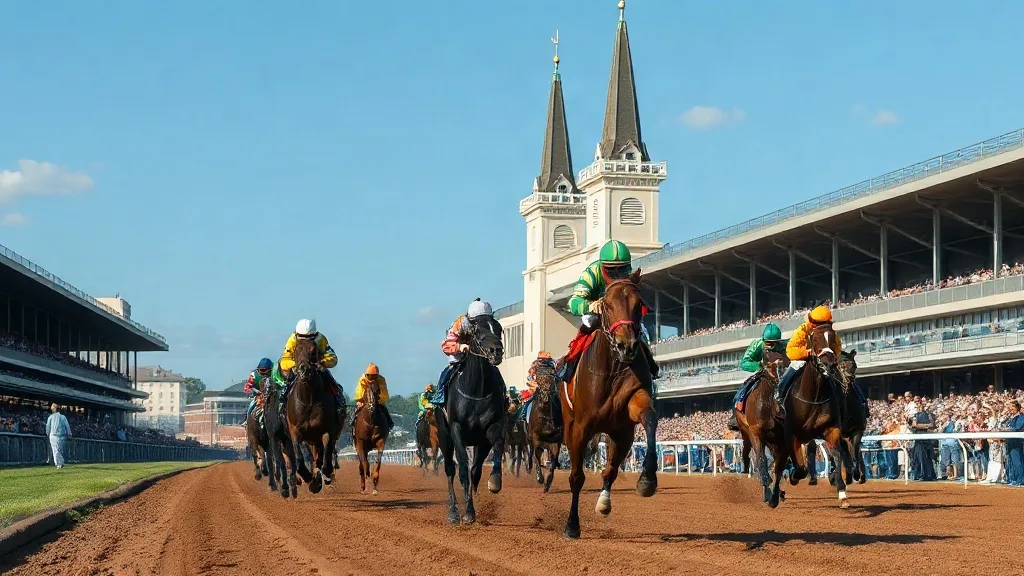
When the gates open for the Clark Stakes at Churchill Downs, it's more than just another high-stakes race. It's a living link to the Kentucky Derby, a tradition that has endured for 152 consecutive years. This year's edition, carrying a hefty $700,000 purse, has drawn a competitive field of 11 entrants, each with a story and a shot at glory. As the horses break from the starting gate, they'll be chasing not only the lion's share of the purse but also a place in racing history.
The Clark Stakes: A Churchill Downs Institution
First run in 1875, the Clark Stakes is one of the oldest stakes races in the United States. Named after the Clark family, prominent figures in Kentucky racing, it has been a fixture at Churchill Downs since its inception. Over the decades, the race has seen its share of legends, from future Hall of Famers to upset winners who defied the odds. Its consecutive run of 152 years is a testament to its enduring appeal and its significance in the racing calendar.
While the Kentucky Derby captures the world's attention on the first Saturday in May, the Clark Stakes offers a different kind of thrill. It's a race that often serves as a stepping stone for horses on the cusp of greatness or a swan song for seasoned campaigners. The 2025 renewal, with its substantial purse and deep field, promises to add another chapter to this storied event.
Field of 11: A Competitive Mix
The 11 entrants for this year's Clark Stakes represent a diverse cross-section of the racing world. From promising three-year-olds taking on older horses for the first time to grizzled veterans looking for one more moment in the spotlight, the field is wide open. Handicappers will have their work cut out for them.
Among the likely favorites is a colt who recently posted a career-best speed figure in a graded stakes at Keeneland. His connections have been pointing to this race for months, and his morning workouts have been nothing short of impressive. But he'll face stiff competition from a mare who has consistently performed at the highest level, including a narrow defeat in a Grade 1 event last fall. Her tactical speed and ability to rate off the pace make her a dangerous foe.
Don't overlook the longshots. A lightly raced four-year-old with a explosive turn of foot could be sitting on a breakout performance. His only off-the-board finish came on a sloppy track, and with a dry forecast, he could spring a surprise. The presence of a speedball who likes to go wire-to-wire adds another layer of intrigue; if he gets loose on the lead, the closers will have their work cut out for them.
Purse and Prestige: Why $700,000 Matters
The $700,000 purse is more than just a number. It's a reflection of the race's importance in the broader context of Thoroughbred racing. In an era where purse money is increasingly concentrated in a handful of marquee events, the Clark Stakes holds its own. The winner's share of $420,000 can transform a horse's career, making it an attractive target for owners and trainers alike.
For breeders, a strong showing in the Clark can enhance a horse's value as a stallion or broodmare prospect. The race's Grade 2 status (it was elevated to Grade 1 in some years) adds black type to pedigrees, which is crucial at auction. In fact, several past Clark winners have gone on to successful stud careers, and this year's victor will be no exception.
Economic Impact on Churchill Downs and Beyond
Churchill Downs is more than a racetrack; it's an economic engine for the region. The Clark Stakes, while not as massive as the Kentucky Derby, still draws thousands of fans and generates significant revenue for local businesses. Hotels, restaurants, and transportation services all benefit from the influx of visitors. The race also provides employment opportunities, from backstretch workers to hospitality staff.
In a time when many racetracks are struggling, Churchill Downs continues to thrive, thanks in part to a diversified business model that includes historical racing machines and casino gaming. The Clark Stakes serves as a showcase for the sport, reminding fans and potential investors of the excitement and tradition that Thoroughbred racing offers.
Handicapping the Race: Key Factors
When analyzing the Clark Stakes, several factors stand out. Post position can be crucial at Churchill Downs, especially in routes around two turns. An inside draw can save ground, but it can also lead to traffic trouble. Conversely, a wide post might force a horse to expend extra energy early.
Pace dynamics will play a pivotal role. With a confirmed front-runner in the field, the race could set up for a closer. But if the speed horse scratches or doesn't break sharply, the race shape changes entirely. Trainers will be studying the past performances closely, looking for any edge.
Class is another consideration. Horses dropping in class from Grade 1 company often have an advantage, but they must carry their speed. Conversely, upwardly mobile horses exiting allowance races might be sitting on a big effort. The balance between class and current form is the handicapper's eternal dilemma.
What a Win Means for the Connections
For the winning owner, a Clark Stakes victory is a signature achievement. It can elevate a stable's reputation and attract new clients. For the trainer, it's a testament to their skill in preparing a horse for a peak effort. And for the jockey, it's another line on a resume that could lead to bigger opportunities.
But perhaps most importantly, it's about the horse. A win in the Clark can open doors to races like the Stephen Foster Handicap or even the Breeders' Cup Classic, depending on the horse's age and ability. It's a stepping stone, but also a destination in itself.
Looking Ahead: The Clark's Place in the Racing Calendar
As the sport evolves, races like the Clark Stakes must adapt to stay relevant. Churchill Downs has done this by enhancing the fan experience, investing in track safety, and promoting the race through digital platforms. The 2025 edition, with its competitive field and substantial purse, is a testament to that effort.
Whether you're a seasoned handicapper or a casual fan, the Clark Stakes offers something special. It's a race steeped in history, yet it never fails to produce new stories. As the horses thunder down the stretch, they'll be carrying the hopes of their connections and the legacy of 152 years of racing at Churchill Downs.
Frequently Asked Questions
What is the Clark Stakes?
The Clark Stakes is a Thoroughbred horse race run annually at Churchill Downs in Louisville, Kentucky. It is one of the oldest stakes races in the United States, having been contested for 152 consecutive years. The race is named after the Clark family, who were influential in Kentucky racing.
How much is the purse for the 2025 Clark Stakes?
The 2025 Clark Stakes offers a total purse of $700,000, with the winner receiving $420,000.
How many horses are entered in the 2025 Clark Stakes?
Eleven horses are entered in the 2025 Clark Stakes, making for a competitive field.
Where can I watch the Clark Stakes?
The race will be broadcast on major racing networks and streamed online through platforms like TwinSpires and the Churchill Downs website. Check local listings for coverage.
What is the distance of the Clark Stakes?
The Clark Stakes is typically run at a distance of 1 1/8 miles on the dirt track at Churchill Downs. However, the exact distance can vary; it's best to check the official race conditions for the current year.