
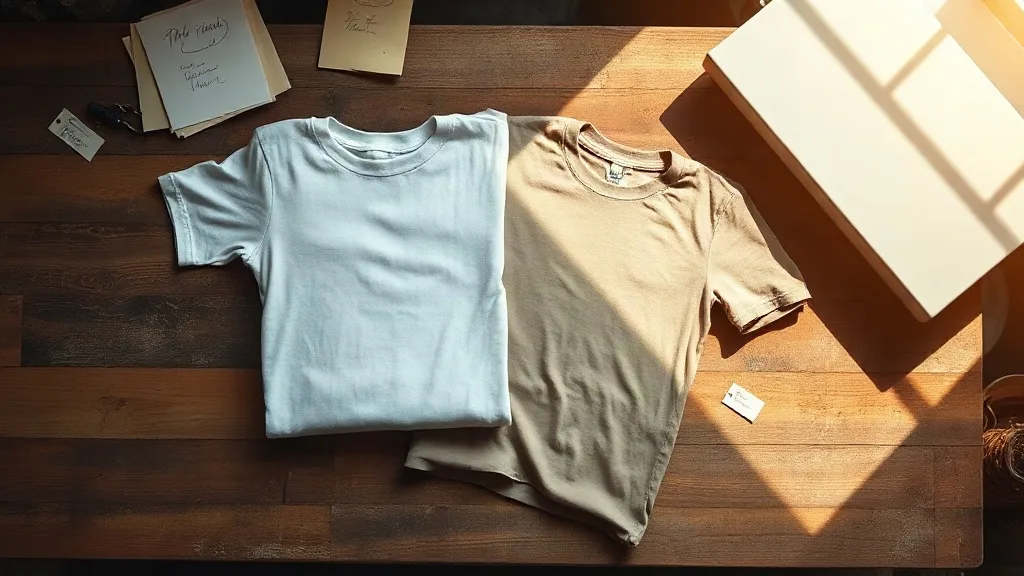
Every DTF project starts with a decision most buyers make too fast: which blank goes under the transfer. The press temperature, the peel, the final hand feel, and how the shirt looks after five washes all trace back to that choice. Two names come up constantly in small apparel shops right now, and they are not interchangeable. smart blanks and shaka wear solve different problems, and knowing which is which saves you money before you ever load a gangsheet.
This is not a brand cheerleading piece. It is a working comparison for shop owners, side-hustle printers, and brand founders who order blanks by the dozen and feel every bad batch in their margins. We will look at fabric behavior, fit, price logic, and the real-world moments when one blank clearly beats the other.
Why the Blank Decides Your Print Quality
A DTF transfer is only as good as the surface it lands on. The adhesive powder needs a consistent weave to lock into, and the fabric needs enough heat tolerance to survive the press without scorching or shrinking. Cotton-rich blanks behave predictably. Polyester blends can shift color under heat. Loose-knit budget tees can let the adhesive sink in too deep, which dulls the print and stiffens the hand feel.
That is why experienced printers keep a small stable of blanks they trust rather than chasing whatever is cheapest that week. smart blanks and shaka wear both earn their place in that stable, but for different reasons.
The fabric factor
When you press a transfer onto a ring-spun cotton tee, the adhesive grabs evenly and the print edge stays crisp. On a heavier, coarser knit, you sometimes need extra pressure and a longer dwell, which raises your risk of over-pressing. Keep notes on every blank you run. A simple spreadsheet with fabric weight, press settings, and wash-test results will tell you more than any product page.
Smart Blanks: The Steady Everyday Workhorse
If your orders skew toward team shirts, event merch, and promotional runs, smart blanks tend to be the sensible default. They read as clean, consistent, and easy to source in volume. The fit is generally middle-of-the-road, which matters when you are printing 60 shirts for a client who does not want to field size complaints.
What printers appreciate most is predictability. A blank that behaves the same across colors and restocks means your press settings carry over from job to job. That consistency is worth real money when you are running gangsheets with dozens of designs and cannot afford to re-press individual pieces.
- Good for bulk orders where uniformity beats novelty
- Friendly to standard press settings, so less trial and error
- Neutral fit that suits corporate, school, and event work
- Easy to reorder, which protects your turnaround promises
Where smart blanks fall short
They are not trying to be a fashion statement. If your customer wants a boxy streetwear silhouette or a heavier hand-feel tee for a premium drop, this blank can feel a little safe. That is not a flaw, just a mismatch. Know when a job calls for personality over predictability.
Shaka Wear: The Streetwear Blank With Presence
Then there is the other side of the coin. shaka wear has built a following among brands that want a heavier, more structured tee. The drape is different, the shoulder sits differently, and the overall look reads closer to what you would find on a boutique rack than in a bulk catalog.
For DTF work, that heavier fabric is mostly a good thing. The surface holds a transfer well, and the print sits on top of the garment rather than disappearing into a thin knit. The trade-off is that you should test your press settings on a sample before committing to a full run. Heavier cotton can need slightly more pressure or a touch more dwell time to get a clean peel.
When to reach for Shaka Wear
Use it when the shirt is part of the product, not just a delivery vehicle for the design. Limited drops, brand merch, influencer pieces, and anything photographed for a lookbook benefit from a blank that adds weight and shape. Customers notice the difference in the hand, even if they cannot name it.
A Practical Decision Framework
Rather than picking a favorite, build a simple rule set for your shop. Here is one that works for most small operations:
- Bulk promotional order, tight deadline, client wants lowest cost per unit: lean toward smart blanks.
- Brand drop, premium positioning, photos will be taken: lean toward shaka wear.
- Mixed order with both needs: split the run and label the blanks clearly so your press operator does not mix them up.
- New design you have never pressed before: always run one test piece on each blank type before the full gangsheet.
The labeling point matters more than it sounds. In a busy shop, a stack of black tees can hide two different brands, and one wrong press setting can cost you a finished piece. Write the blank name on the size sticker or keep separate piles per job.
Press Settings and Wash Testing
Whatever blank you choose, treat the first run as a test. Press a sample, then wash it inside out, cold, and tumble low. Check for edge lift, cracking, and color shift. Document what you find. A shop that keeps wash-test records builds a private database that no supplier can take away, and it turns guesswork into repeatable process.
For lighter blanks, watch for scorching on heat-sensitive colors like navy and charcoal. For heavier blanks, watch for incomplete adhesive cure, which shows up as premature peeling at the corners. Both problems are fixable with small adjustments, but only if you catch them on a sample instead of a customer order.
One more habit worth building: order a single blank in each color you plan to use before a large run. Dye lots vary, and a transfer that looks perfect on one batch can look slightly off on the next. It is a small cost that protects a much bigger one.
Frequently Asked Questions
Are smart blanks good for DTF printing?
Yes. Their consistent cotton-rich fabric takes transfers well and holds standard press settings, which makes them a reliable choice for bulk and promotional orders where uniformity matters most.
Does Shaka Wear work with DTF transfers?
It does, and the heavier fabric tends to hold prints nicely. Test your press settings on a sample first, since the extra weight may call for slightly more pressure or dwell time than a lighter tee.
Which blank is cheaper per unit?
Cost varies by supplier, color, and order size, so check current pricing rather than assuming. In general, the more budget-oriented blank suits high-volume work, while the premium option makes more sense when the shirt itself is part of the brand story.
Can I mix both blanks in one order?
Absolutely. Many shops keep both on hand and route jobs by client need. Just label the blanks clearly and keep press settings documented per brand so nothing gets pressed with the wrong profile.
How do I know which blank my customer will prefer?
Ask what the shirt is for. If it is a giveaway or uniform, they usually want consistency and value. If it is a product they will sell or photograph, show them a sample of each and let the fabric do the talking.
The right blank is not the one with the best marketing. It is the one that fits the job in front of you, presses cleanly, and survives the wash. Keep a sample of each in your shop, run your own tests, and let the results guide the next order.