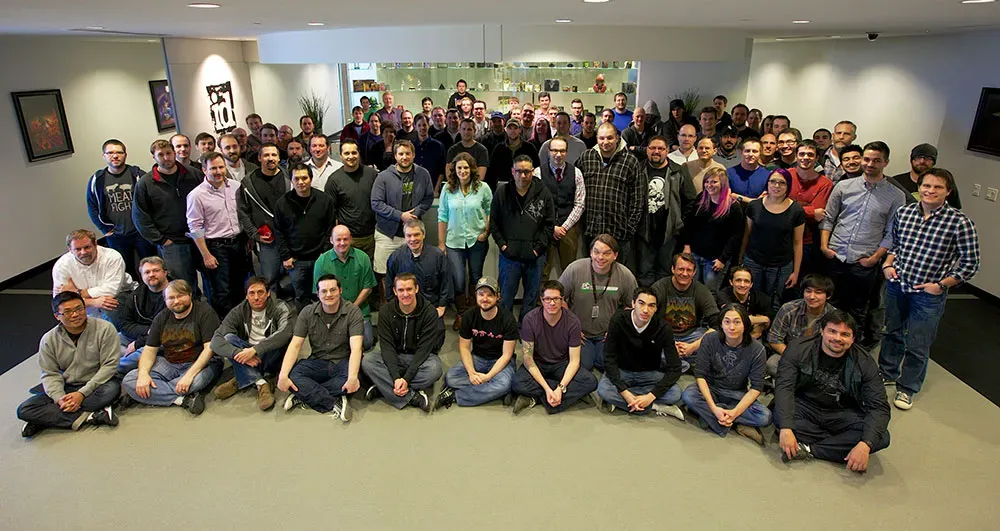
id Software union has emerged at the Texas-based studio best known for the Doom franchise, signaling a major shift for workers. The Communications Workers of America (CWA Local 6215) reported that 165 employees voted yes to form a bargaining unit, with about 185 total staff. This is a wall-to-wall organizing effort spanning multiple departments, underscoring the drive behind a video game workers union movement. Andrew Willis, a producer and a member of the organizing committee, said the union would let developers take back control of the industry and secure health benefits and longevity beyond quarterly profits. The sentiment mirrors broader conversations about labor rights and the long-term stability of the industry.
Viewed through an industry-wide lens, many studios are seeing staff push for formal representation, signaling a game developers union mindset spreading across the field. These moves reflect a broader trend toward worker representation in the industry. As more teams pursue collective bargaining, analysts note a shift in how studios approach labor relations and project planning. The case at id Software and related actions at other studios illustrate how workers are reshaping the conversation around quality, longevity, and industry sustainability.
id Software union: A landmark in video game studio unionization and gaming industry unions
Staff at the Texas-based id Software have taken a decisive step in video game studio unionization, voting 165 in favor to form a bargaining unit within the CWA Local 6215. This result, out of roughly 185 employees, signals a wall-to-wall union effort that spans departments across the studio. The move places id Software among the growing ranks of gaming industry unions seeking formal representation to negotiate with management and secure enduring protections for workers.
As the industry increasingly acknowledges the role of a video game workers union, this development highlights how the broader gaming ecosystem is responding to calls for stable health benefits, job security, and a voice in decision-making. The id Software union reflects a broader trend in video game studio unionization, where developers and staff seek to balance creative independence with predictable workplace terms amid fluctuating quarterly profits.
How CWA Local 6215 supports id Software staff and long-term union contracts
CWA Local 6215’s involvement is central to the id Software union’s formation, providing structured representation for a diverse range of departments. The bargaining unit’s creation demonstrates the union’s ability to organize across roles, rather than within isolated teams, reinforcing the message that all staff—from engineers to producers—have a stake in the studio’s future.
With formal recognition comes the potential for a lasting collective bargaining agreement that can secure baseline health benefits, longevity, and career stability. This aligns with the goals of a game developers union and other video game workers union movements, reinforcing the idea that collaboration with Local 6215 can set standards that influence the wider gaming industry unions landscape.
Wall-to-wall organizing reshapes the gaming industry and the idea of a game developers union
The id Software effort is described as wall-to-wall organizing, a strategy aimed at uniting staff from multiple disciplines under a single bargaining unit. This approach mirrors broader movements toward a game developers union, where cross-functional collaboration strengthens workers’ leverage when negotiating with senior leadership.
Such organizing not only empowers individual studios but also signals a shift in how the gaming industry views unions. As more departments enter the bargaining process, the potential for standardized practices across different studios grows, contributing to the momentum seen in gaming industry unions and the broader conversation about worker representation in development pipelines.
From Doom to Diablo: Tracing the spread of video game workers union momentum in major studios
The success at id Software follows a growing momentum where unions are forming or expanding in other high-profile studios. The trajectory mirrors similar movements at Bethesda Game Studios and ZeniMax Online Studios, where staff have pursued organized representation in pursuit of fair working conditions within the gaming industry.
This expansion underscores how the video game workers union concept is taking root across the sector. As unions gain traction in major franchises and development teams, the broader narrative of video game studio unionization becomes a defining feature of the industry’s evolution toward more collaborative labor practices.
The impact of neutrality contracts on union recognition in the gaming industry
A key backdrop to these organizing efforts is Microsoft’s neutrality agreement with the Communications Workers of America, signed in 2022. Neutrality terms can facilitate union recognition by reducing management resistance during the initial organizing phase, accelerating the process of staff joining a video game workers union.
Since that agreement, divisions in Microsoft’s games business have moved toward union representation, signaling how neutrality arrangements can influence the pace and scope of gaming industry unions. As studios weigh this legal landscape, staff see opportunities to formalize their voices through unions that may extend beyond a single studio or project.
Microsoft’s neutrality agreement as a turning point for gaming industry unions
The neutrality agreement with the CWA provided a framework for how gaming industry unions could grow within a major corporate structure. This turn of events has encouraged more studios to consider union representation as a viable and productive path, aligning incentives for both workers and management to engage in collective bargaining.
The broader wave of unionization efforts—spanning Blizzard, ZeniMax, Raven Software, and Activision studios—reflects how neutrality provisions can catalyze broader changes. As these unions gain visibility, the public conversation around video game studio unionization and gaming industry unions becomes more nuanced, focusing on the concrete benefits of worker advocacy and stable development cycles.
The rise of studio-specific and cross-studio unions in the video game sector
The id Software example illustrates a rise in studio-specific unions that nonetheless connect through common labor frameworks like CWA Local 6215. At the same time, cross-studio collaboration among unions helps standardize practices, enabling workers in different studios to share strategies and support one another’s bargaining goals.
This dual path—local strength with cross-studio alignment—could set precedent for a more unified voice in the gaming industry. As more studios look to form or join unions, the dialogue around video game studio unionization expands to include best practices for equity, benefits, and long-term career development within the broader realm of gaming industry unions.
What a collective bargaining agreement could mean for health benefits and job security
Attaining a collective bargaining agreement (CBA) would anchor tangible gains for id Software staff and the broader gaming community seeking a video game workers union. CBAs typically address wage scales, benefits, health coverage, retirement security, and protections against sudden, unilateral workplace changes.
For developers and other studio personnel, such agreements translate into steadier project timelines and a clearer path to career longevity, moving the industry away from quarterly-profit pressures toward sustainable creative development. This aligns with the aspirations of a game developers union seeking durable terms that bolster both talent and product quality.
The role of unions in stabilizing creative development in AAA studios
Unions can play a crucial role in stabilizing the creative process within AAA studios by providing predictable terms and pathways for dispute resolution. When workers feel heard through their representation, studios may experience fewer disruptive labor tensions, allowing for steadier production pipelines and higher-quality releases.
The id Software union and other gaming industry unions are part of a broader effort to ensure that creative talent remains committed and healthy. By prioritizing worker welfare and professional development, the industry can better balance innovation with sustainable employment practices, contributing to long-term studio success.
The broader trend: unions gaining traction in Blizzard, ZeniMax, Raven Software, and Activision studios
In 2025 alone, unions have formed in Blizzard’s story and franchise development team and in ZeniMax Online Studios, expanding the footprint of gaming industry unions within the broader corporate ecosystem. The momentum extends to Activision studios and Raven Software, where workers have pursued recognition and bargaining rights.
This expanding landscape demonstrates that the movement toward video game studio unionization is not isolated to a single company. Instead, it reflects a systemic shift in how developers and other staff seek representation across major franchises, shaping a more inclusive model of the gaming industry unions that can benefit both workers and product teams.
The ongoing debate: unionization vs management prerogatives in the gaming industry
As unions gain visibility, the debate over the balance between workers’ rights and management prerogatives intensifies. Proponents argue that unions help secure essential protections, while opponents warn of potential constraints on rapid decision-making and hardware or software timelines.
The id Software union case provides a practical example of how staff can organize to advocate for their interests without stifling development creativity. The conversation around gaming industry unions continues to evolve as stakeholders weigh short-term operational concerns against long-term workforce stability and quality output.
How researchers and journalists track the growth of video game workers unions and their social impact
Observers, researchers, and journalists are closely watching how unions like the id Software union influence workplace culture and project outcomes. Tracking the spread of video game studio unionization helps illuminate patterns in labor organizing, including cross-studio collaborations and the role of organizations like CWA Local 6215.
The broader discussion about gaming industry unions emphasizes not just workplace terms, but also the societal impact of stronger worker representation in tech-heavy creative sectors. By highlighting stories across studios—from Bethesda to Raven Software—analysts can better assess how unions influence job security, benefits, and the sustainability of innovative gaming experiences.
Frequently Asked Questions
What is the id Software union and what did they vote for?
The Texas-based id Software, best known for the Doom franchise, voted to form a union within the Communications Workers of America (CWA). The move creates a bargaining unit that will be represented by CWA Local 6215.
How many employees voted yes to form the id Software union, and what is the bargaining unit size?
165 workers voted yes out of around 185 total employees, establishing a wall-to-wall bargaining unit that covers staff across multiple departments at id Software. The unit will be represented by CWA Local 6215.
Which union represents id Software staff in the CWA Local 6215?
The id Software union will be represented by the Communications Workers of America (CWA) Local 6215 after the staff vote.
What does ‘wall-to-wall’ organizing mean in the context of the id Software union?
Wall-to-wall organizing means staff from across many departments at id Software are included in the bargaining unit, not just a single department or a subset.
Why is the id Software union important in the broader context of video game studio unionization and gaming industry unions?
The id Software union underscores a broader trend of video game studio unionization and gaming industry unions, as more studios pursue collective bargaining to improve working conditions and job security in the industry.
Has Microsoft or CWA neutrality influenced unionization at id Software?
Microsoft’s 2022 labour neutrality agreement with the CWA created a context in which staff can form unions with recognition. The id Software union forms within that broader framework, though its vote was conducted locally for id Software.
How does the id Software union fit with other recent gaming industry union efforts, like Bethesda, ZeniMax Online, Blizzard, and Raven Software?
Following the neutrality agreement, several divisions in Microsoft’s games business have pursued union representation, including Bethesda Game Studios (July 2024) and ZeniMax Online Studios (December 2024). In 2025, unions formed in Blizzard’s studios and Activision-related teams, and Raven Software secured a collective bargaining agreement with Microsoft. This illustrates a broader trend of gaming industry unions and the rise of the video game workers union movement.
What benefits or goals does the id Software union prioritize for its members?
The union aims to give developers a voice in decisions, protect health benefits, and promote stability and longevity beyond quarterly profits, reflecting the goals often associated with game developers union efforts and the video game workers union movement.
What should other game developers know about joining or supporting unions like the id Software union?
Other developers can learn from id Software by engaging with employees, researching CWA Local 6215, and understanding the process for forming a union. Support can come from solidarity, education, and participation in the broader gaming industry unions.
Where can I learn more about video game studio unionization and gaming industry unions related to the id Software union?
To follow this topic, monitor updates on the id Software union, the CWA Local 6215, and related gaming industry unions covering video game workers union efforts, game developers union activities, and broader trends in video game studio unionization.
| Key Point | Details |
|---|---|
| Id Software staff vote to form a union | Texas-based studio id Software (known for Doom) staff voted to form a union. 165 workers voted yes out of around 185 total, and they will be members of CWA Local 6215. The union is wall-to-wall, representing staff from multiple departments across the company. |
| Union affiliation | The id Software union is part of the Communications Workers of America (CWA), Local 6215. |
| Statements from organizers | Andrew Willis (CWA Local 6215 organising committee) said the wall-to-wall effort was much needed and helps developers push back on unilateral changes. Caroline Pierrot added that more unions empower workers and help shape a better future for the industry. |
| Industry context: neutrality agreement | In June 2022, Microsoft entered into a labour neutrality agreement with CWA, meaning staff at Microsoft can form a union and be automatically recognised by the company. |
| European Commission step | The CWA later asked the European Commission to approve Microsoft’s acquisition of Activision Blizzard. |
| Trend in Microsoft game divisions | Since the neutrality agreement, several divisions in Microsoft’s games business have voted to have union representation. |
| Bethesda Game Studios | In July 2024, nearly 250 staff at Bethesda Game Studios voted to unionise. |
| ZeniMax Online Studios | In December 2024, ZeniMax Online Studios voted to unionise. |
| 2025 unions across Blizzard and Activision teams | In 2025, unions formed in Blizzard’s story and franchise development team (Diablo, Hearthstone, Warcraft Rumble). Activision user researchers voted to unionise, and Raven Software secured a collective bargaining agreement with Microsoft three years after starting the unionisation process. |
Summary
id Software union marks a milestone for developers seeking representation in the gaming industry. The staff vote, wall-to-wall coverage, and linkage to a broader wave of union activity across Microsoft-related studios highlight growing momentum for organized labor in game development.